...

How Lavender Is Harvested

Lavender is typically harvested during the summer when the flowers are fully open and the plant’s aromatic oils are at their highest concentration. Harvest timing depends on the variety of lavender, weather conditions, and whether the lavender will be used for essential oil, dried bundles, or culinary purposes.

At lavender farms in places like Sequim, Washington, harvest season usually occurs from late June through August, when the fields are in full bloom.
When Lavender Is Ready to Harvest

Lavender is usually ready to harvest once the flower spikes have developed and the plants are producing strong fragrance.

Farmers often look for:

  • Fully developed flower spikes

  • Strong lavender fragrance

  • Healthy color across the field

Once lavender reaches full bloom there is generally a large harvest window. However, growers try not to wait too long. If the flowers begin drying out and the buds start falling from the stems, both quality and yield can decline.


Lavender is typically harvested during dry weather, since wet plants can be harder to dry and process.

How Lavender Is Harvested

Harvest Timing Depends on How the Lavender Will Be Used

Lavender is harvested at different stages of bloom depending on how it will be used. Farmers watch the flowers closely because harvest timing affects appearance, fragrance, and oil production.

Fresh Lavender Bouquets

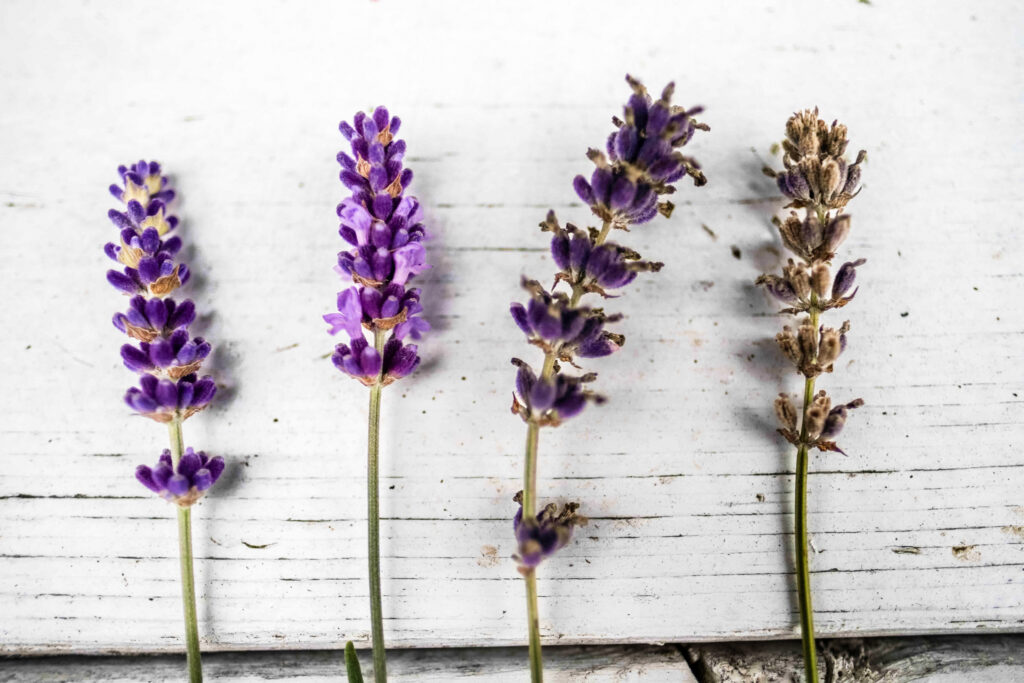
Lavender harvested for fresh bouquets is usually cut when the flowers are just beginning to open, or right before they open.

At this stage the buds are still tight and the stems are strong. After cutting, the flowers will continue opening, creating a full bouquet.

Harvest Lavender

Lavender Bud and Dried Bunches

Lavender harvested for buds or dried bunches is typically cut when roughly 10% of the flowers have opened.

This stage indicates that the buds are fully developed while still holding tightly to the stem. Harvesting at this point helps the buds stay intact during drying and processing.

This timing is commonly used for lavender that will be used in sachets, culinary lavender, or other dried lavender products.

Lavender for Essential Oil

Lavender grown for essential oil distillation is usually harvested when the flowers are fully open.

At full bloom the oil glands in the flowers are typically at their highest concentration, which helps maximize oil yield during distillation.

Large quantities of lavender are harvested at this stage and transported to the still for processing.

How Lavender Is Harvested

Lavender can be harvested either by hand or with mechanical harvesting equipment, depending on the size of the farm and the intended use of the crop.

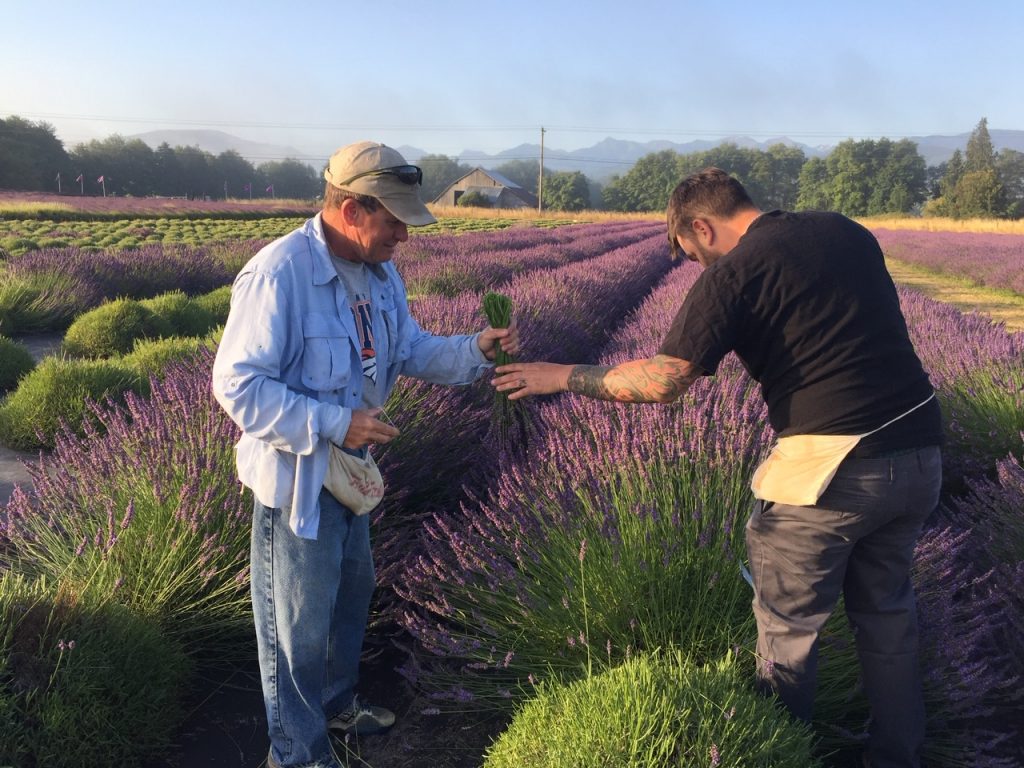
Zion and Mark Harvesting Lavender

Hand Harvesting Lavender

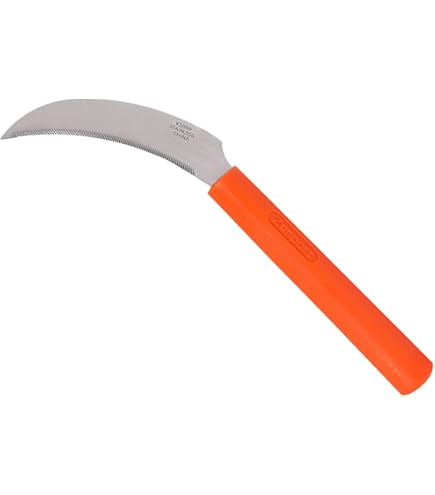
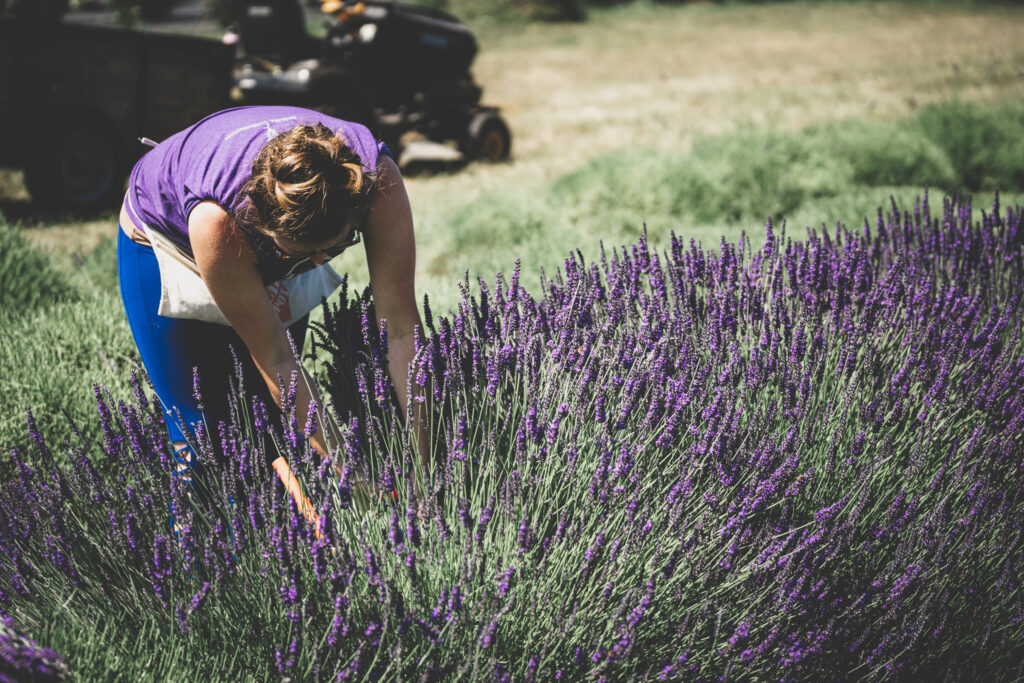
Many farms harvest lavender by hand using pruning shears or harvesting knives.

The stems are cut several inches above the woody base of the plant. Cutting above the woody portion helps the plant regrow and produce new stems the following season.

Hand harvesting allows farmers to:

  • Select the best stems

  • Create neat bundles for drying

  • Avoid damaging the plant

Hand harvesting is commonly used for lavender that will be sold as fresh or dried bundles.

Mechanical Lavender Harvesting

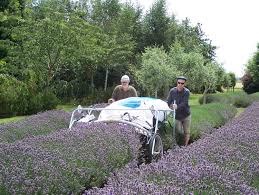
Larger lavender farms sometimes use mechanical harvesters designed to cut and collect lavender stems quickly.

These machines allow farmers to harvest large fields efficiently during the short harvest season. Mechanical harvesting is often used when lavender is grown primarily for essential oil production, where large volumes of plant material are needed for distillation.

Harvesting Mechanical

What Happens After Lavender Is Cut

Once lavender is harvested, the next step depends on how the lavender will be used.

Lavender may be:

  • Bundled and hung to dry

  • Processed into dried lavender bud

  • Distilled to produce essential oil and hydrosol

Timing can be important for some uses. For example, lavender that will be distilled for essential oil is often processed soon after harvest to preserve the aromatic compounds in the flowers.

Lavender Hanging to Dry

Lavender Harvest Season in Sequim

Sequim, Washington is known as the Lavender Capital of North America due to its unique rain-shadow climate on the Olympic Peninsula.

Lavender harvest season in Sequim typically occurs during mid to late summer, when fields across the Sequim-Dungeness Valley are in bloom.

During this period lavender farms harvest their fields while preparing lavender for drying, culinary use, and distillation.

Visitors exploring lavender farms during the summer may see harvesting taking place in the fields.

Lavender Harvest at B&B Family Lavender Farm

At B&B Family Lavender Farm in Sequim, lavender is harvested throughout the summer bloom, with timing depending on how the flowers will be used.

Some stems are cut early for fresh bouquets, when the flowers are just beginning to open. Lavender that will be used for dried buds and dried bunches is harvested when the buds are fully developed and about 10% of the flowers have opened, which helps the buds hold tightly to the stems during drying and processing.

Lavender grown for essential oil distillation is harvested later, when the flowers are fully open and the oil content in the blooms is at its peak.

Harvest season is one of the busiest times on the farm as fields are cut and lavender moves from the field into drying, processing, or distillation.

Bruce Harvesting Fresh Bunches

Frequently Asked Questions About Lavender Harvest

When is lavender harvested?

Lavender is usually harvested during the summer when the flowers have developed and fragrance is strongest.

Can lavender be harvested more than once per year?

In some climates certain varieties may produce a second smaller bloom, but most lavender farms harvest once per year during the main summer bloom.

How do farmers cut lavender?

Lavender stems are typically cut several inches above the woody base of the plant using pruning shears, harvesting knives, or mechanical harvesters.

What happens to lavender after it is harvested?

After harvest lavender may be dried, processed into buds, made into bundles, or distilled to produce essential oil and hydrosol.

Plan Your Visit to Sequim Lavender

Visit B&B Family Lavender Farm

If you're visiting Sequim during lavender season, B&B Family Lavender Farm offers a relaxed, less crowded experience with wide open fields and handcrafted lavender products.

Get Directions
Shop Lavender Products